
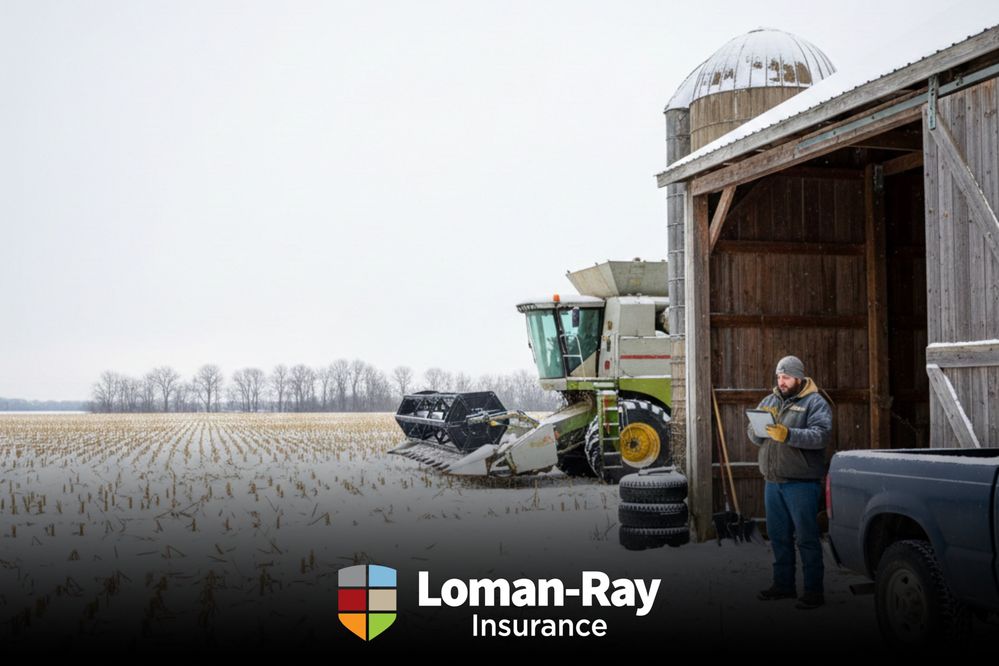
For many Illinois farmers, January feels quieter than the months ahead. Equipment is parked, fields are frozen, and long days in the cab are still weeks away. But when it comes to crop insurance, January is one of the most important months of the year.
The decisions that protect your operation during planting, growing, and harvest are often made now, well before spring deadlines arrive. Taking time in January to review coverage, production history, and risk exposure puts you in control instead of reacting under pressure later.
At Loman-Ray Insurance Group, we see January as the planning window where strong crop insurance strategies are built. Here’s what Illinois farmers should be reviewing right now to be prepared for the season ahead.
Why January Matters for Crop Insurance
Crop insurance deadlines may not hit until March, but waiting until then limits flexibility. January allows time to evaluate last year, correct issues, and tailor coverage without rushing.
This is when farmers can:
-
Review what worked and what didn’t last season
-
Confirm accurate production records
-
Align insurance coverage with rising input costs
-
Ask questions and explore options thoughtfully
Strong coverage decisions aren’t made at the last minute. They’re made during winter planning.
A good crop insurance review always starts with the previous season.
Ask yourself:
-
Did actual yields match expectations?
-
How did weather impact different fields?
-
If you had a claim, did the coverage perform the way you expected?
Even if no claim was filed, last year’s results offer insight into how well your coverage aligned with real-world conditions. Variability across acres, weather patterns, and production challenges should all be part of the conversation.
January is the right time to step back and assess, not when spring workloads pile up.
Your Actual Production History (APH) is the foundation of your crop insurance protection. Errors or missing records can quietly reduce your guarantee without you realizing it.
Important items to review include:
-
Reported yields match scale tickets and records
-
All eligible acres are accounted for
-
Any anomalies from past seasons are explained properly
Even small reporting discrepancies can affect coverage levels and claim outcomes. January provides time to correct issues before decisions are locked in.
Accurate production history equals stronger protection.
Farming today is more expensive than it was just a few years ago. Seed, fertilizer, fuel, and equipment costs continue to rise, increasing the financial risk tied to each acre.
That makes coverage level decisions more important than ever.
Key considerations include:
-
Are current coverage levels adequate to protect operating capital?
-
Would a revenue shortfall create cash flow stress?
-
How much downside risk can the operation realistically absorb?
Higher coverage isn’t about maximizing payouts, it’s about ensuring the farm can withstand a difficult year without compromising long-term stability.
January is the time to reassess whether last year’s coverage still makes sense for this year’s cost structure.
Revenue Protection remains one of the most widely used crop insurance options for Illinois farmers, and for good reason. It helps protect against both yield loss and price decline, two risks that often occur together and can significantly impact farm income.
But in today’s environment, many operations are looking beyond base coverage alone.
That’s where Enhanced Coverage Options (ECO) comes into the conversation. ECO allows producers to increase coverage up to 90% or 95% of expected revenue, helping close the gap between standard Revenue Protection policies and the full financial exposure tied to today’s input costs.
To help manage premium costs while maintaining strong protection, crop insurance carriers also offer ECO Offset Products. These private products are designed to complement ECO by adding flexibility and affordability without sacrificing risk management strength.
Examples include:
-
ECO+ from Farmers Mutual Hail – Adds coverage above standard ECO levels for enhanced risk management
-
AIM (Additional Insurance Management) from Producers Ag – A customizable offset solution that helps balance premium and protection
-
MyECO from Hudson Crop Insurance – Tailored options designed to fit an operation’s unique risk profile
When reviewing these options in January, consider:
-
How volatile prices have been recently
-
The relationship between market swings and farm income
-
Whether higher coverage through ECO and an offset product aligns with your financial obligations
Used together, Revenue Protection, ECO, and ECO Offset Products can provide meaningful stability during unpredictable seasons—especially when margins are tight and operating costs remain high.
Why These Options Matter
These tools aren’t about chasing payouts. They’re about protecting working capital, preserving cash flow, and ensuring long-term stability. For many operations, they help bridge the gap between traditional coverage and the real financial exposure farmers face today.
Beyond coverage type and level, policy structure matters. How acres are grouped and reported can impact both premiums and claim outcomes.
January is a good time to review:
-
Enterprise versus optional units
-
How different fields perform relative to each other
-
Whether current unit choices still reflect the operation accurately
These decisions are technical, but they can make a real difference. Reviewing them early allows for thoughtful adjustments rather than rushed choices.
Illinois weather continues to challenge even experienced operations. Excess moisture, delayed planting, early frost, and extreme events are no longer rare.
Crop insurance is more than a safety net, it’s a planning tool that supports decision-making when conditions don’t cooperate.
January planning helps ensure coverage:
-
Provides flexibility during delayed or difficult planting seasons
-
Supports tough calls when weather disrupts timelines
-
Reduces financial stress during uncontrollable events
Preparing for weather risk now gives you options later.
One of the most valuable January steps is simply sitting down with your crop insurance agent early.
Early conversations allow time to:
-
Ask questions without pressure
-
Understand how coverage responds in different scenarios
-
Customize protection to fit your operation—not a template
At Loman-Ray, we believe strong crop insurance planning is collaborative. January gives us time to listen, review, and tailor solutions that make sense for how you farm.
Start the Year Prepared
Crop insurance decisions shape how resilient your operation will be when challenges arise. January is the month to review, refine, and prepare... before planting season demands full attention.
Taking the time now can:
-
Reduce stress later
-
Improve financial stability
-
Ensure coverage matches today’s realities
If you haven’t reviewed your crop insurance yet this winter, now is the time. A proactive approach in January sets the tone for a stronger, more confident season ahead.
Loman-Ray Is Here to Help You Plan with Confidence
Crop insurance decisions don’t have to be made alone or under pressure. At Loman-Ray Insurance Group, we work closely with Illinois farmers to review coverage, answer questions, and make sure crop insurance aligns with the realities of your operation.
Our team understands local conditions, evolving weather risks, and the financial pressures farmers face year after year. Whether you’re reviewing coverage levels, verifying production history, or simply want a second set of eyes on your policy, we’re here to help you plan with clarity and confidence.
If you haven’t had your crop insurance conversation yet this winter, now is the time.
Reach out to your local Loman-Ray agent to schedule a review and make sure your coverage is ready for the season ahead.