
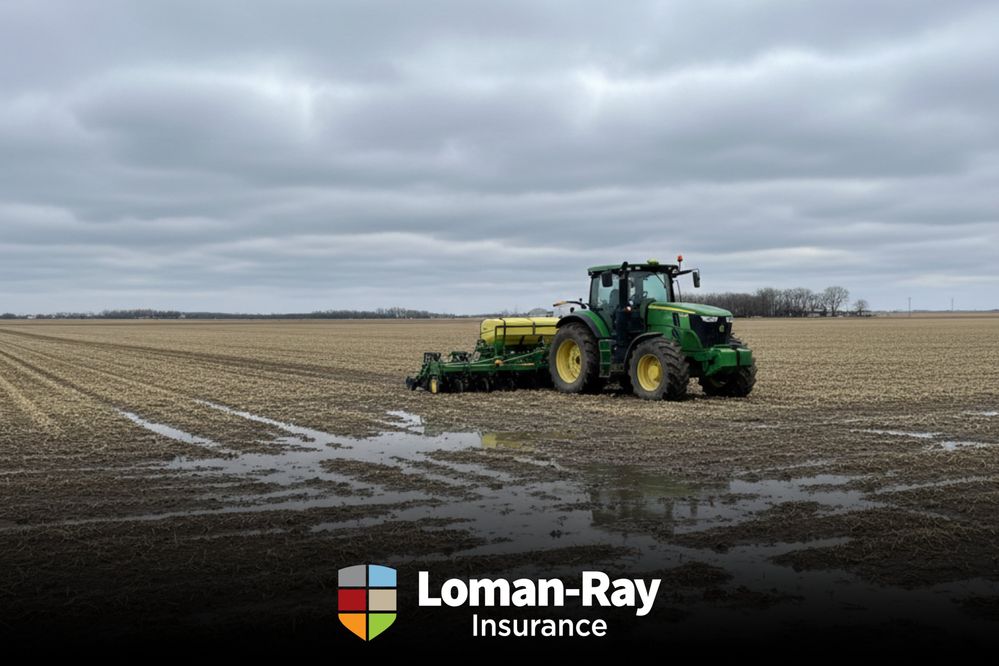
Illinois farmers know that not every growing season follows the plan. Excess moisture, delayed fieldwork, flooding, or early-season storms can force difficult decisions long before a crop ever reaches full growth.
In those moments, crop insurance is more than a backstop, it becomes a decision-support tool. Understanding the difference between prevented planting and replanting coverage, and how each applies, helps farmers respond confidently when weather and conditions disrupt even the best-laid plans.
Here’s how these protections work and why planning for them ahead of time matters.
Weather variability across Illinois has increased. Wet springs, compressed planting windows, and localized storm events are now realities many farms face regularly, not once a decade.
When planting is delayed or early stands fail, farmers are often forced to make fast decisions that affect:
-
Yield potential
-
Input investment
-
Cash flow for the year
-
Long-term soil and rotation plans
Crop insurance helps reduce the financial pressure behind those decisions, allowing farmers to choose the best agronomic and operational path, not just the least costly one.
Prevented planting applies when a covered cause of loss, most commonly excess moisture, prevents a crop from being planted by the final planting date or during the late planting period.
Key points farmers should understand:
-
Prevented planting is not automatic
-
Eligibility depends on weather, timing, and acreage history
-
Coverage is based on acres that were intended to be planted
Prevented planting provides a payment designed to offset a portion of the lost revenue and input costs when planting simply isn’t possible.
It gives farmers the flexibility to pause, reassess, and protect the operation financially when conditions make planting unrealistic.
Replanting coverage applies when a crop is planted, but early damage—such as flooding, frost, or severe weather—requires the field to be replanted.
Replanting coverage is intended to:
-
Help offset additional seed and planting costs
-
Support replant decisions when stands fail
-
Reduce the financial burden of starting over
Coverage depends on factors like:
-
Acreage affected
-
Cause of loss
-
Crop-specific thresholds
Replanting coverage does not guarantee that replanting is always the best decision—but it ensures cost is not the only factor driving that choice.
While both cover weather-related disruptions, they serve different purposes.
-
Prevented planting applies when planting cannot occur at all
-
Replanting coverage applies when planting occurs, but the stand fails early
Understanding which situation applies—and when—can impact eligibility, documentation, and payments.
That’s why early communication and accurate reporting are critical.
When fields are wet or early stands are compromised, decisions often need to be made quickly. But they shouldn’t be made blindly.
Farmers should consider:
-
Current and forecasted weather
-
Calendar timing and yield potential
-
Input costs already invested
-
Long-term implications for the field
Crop insurance provides financial support so decisions can be made based on agronomics and practicality, not just sunk costs.
Prevented planting and replanting situations require timely action.
Best practices include:
-
Contacting your crop insurance agent early
-
Documenting conditions and acreage accurately
-
Following reporting and notice requirements
Delays or assumptions can create complications later. Clear communication protects eligibility and ensures coverage responds as intended.
No one plans for prevented planting or replanting, but planning for the possibility matters.
When coverage is structured correctly:
-
Weather disruptions don’t automatically become financial crises
-
Tough calls feel more manageable
-
Operations maintain flexibility in uncertain conditions
That peace of mind starts with winter planning—not spring emergencies.
At Loman-Ray Insurance Group, we understand that prevented planting and replanting decisions are some of the most stressful moments of the season. Our role is to help farmers understand their options, communicate clearly, and make informed decisions when conditions change.
We work closely with Illinois farmers to:
-
Review coverage before the season begins
-
Explain how prevented planting and replanting apply
-
Provide guidance when weather disrupts planting plans
If you’d like to review your crop insurance coverage or better understand how it supports tough decisions during unpredictable seasons, we’re here to help.
Reach out to your local Loman-Ray agent to start the conversation and plan with confidence before planting begins.