
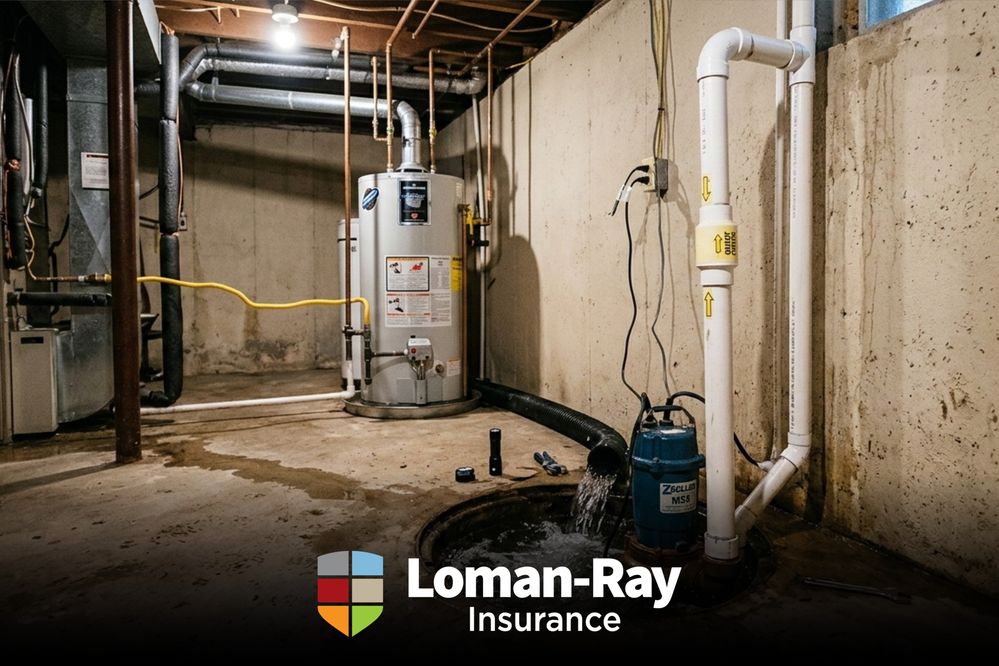
For many homeowners across Illinois, a sump pump is one of the most important and often overlooked pieces of equipment in the entire home.
Located in the basement, this system quietly works to move groundwater away from your foundation and prevent water from entering your home. Most of the time, homeowners rarely think about their sump pump at all.
But when a sump pump fails during a heavy rainstorm, the results can be costly.
Water can quickly enter the basement, damaging flooring, drywall, furniture, appliances, and stored belongings. Cleanup and repairs can become expensive, and the disruption to daily life can last weeks.
Because sump pump failures are relatively common in the Midwest, it’s important for homeowners to understand how insurance coverage works, and whether their current policy would help cover the damage.
Why Sump Pumps Are So Important in Illinois
Many homes throughout Central Illinois rely on sump pumps because of the region’s soil conditions and seasonal weather patterns.
During spring and early summer, melting snow and heavy rainfall can cause groundwater levels to rise around home foundations. Without a sump pump actively removing that water, pressure can build around the foundation and eventually allow water to enter the basement.
Sump pumps are designed to prevent this problem. They collect water in a pit beneath the basement floor and automatically pump it away from the house.
When everything works properly, homeowners rarely notice the system doing its job.
However, if the pump stops working, especially during a storm, water may begin entering the basement quickly.
Why Sump Pumps Fail
Although sump pumps are generally reliable, they are mechanical devices, which means failures can occur for several reasons.
One of the most common causes is power outages. Severe storms can knock out electricity, and if the sump pump relies solely on household power, it cannot operate when it’s needed most.
Mechanical failure is another possibility. Over time, motors wear out, switches malfunction, and components degrade. Without regular maintenance, older sump pumps may stop working without warning.
Clogged or frozen discharge lines can also prevent water from being pumped away from the home properly. If the pipe that carries water away from the house becomes blocked, water may back up into the system.
Heavy rainfall can also overwhelm a sump pump if large volumes of groundwater enter the sump pit faster than the pump can remove it.
When these situations occur during a major storm, basement water damage can happen quickly.
The Cost of Basement Water Damage
Water entering a basement can lead to more damage than many homeowners initially expect.
Moisture can soak into carpets, drywall, insulation, and wood framing. Furniture, appliances, and storage items in the basement may also be damaged or destroyed.
In addition to repairing the initial damage, homeowners may face costs for drying the space, replacing materials, and addressing potential mold issues.
Depending on the severity of the situation, basement water damage can easily result in several thousand dollars in repairs.
Because basements are often used for storage or living space, the financial impact can be significant.
Does Homeowners Insurance Cover Sump Pump Failures?
This is one of the most common questions homeowners ask.
In most cases, standard homeowners insurance policies do not automatically cover water damage caused by sump pump failures or sewer backups.
While homeowners insurance typically covers sudden plumbing issues inside the home, such as a burst pipe, water that backs up through sump pumps, drains, or sewer systems is usually excluded unless additional coverage has been added to the policy.
This is where water backup coverage (sometimes referred to as sump pump overflow coverage) becomes important.
What Is Water Backup Coverage?
Water backup coverage is an optional endorsement that can be added to many homeowners insurance policies.
This coverage helps protect homeowners from damage caused by water backing up through drains, sump pumps, or sewer systems.
If a sump pump fails and water backs up into the basement, this endorsement may help cover the cost of repairing damage to the home and replacing certain personal belongings.
Coverage limits vary depending on the policy, but many homeowners choose limits designed to cover potential basement repairs, flooring replacement, and damage to personal property.
Because water backup incidents are relatively common in many Midwest communities, this type of coverage is often considered a valuable addition to a homeowners policy.
Warning Signs Your Sump Pump May Need Attention
While sump pump failures can sometimes happen suddenly, there are often warning signs homeowners can watch for.
Unusual noises, excessive vibration, or the pump running continuously may indicate a mechanical issue. If the pump rarely activates during heavy rain, it could also signal a malfunction.
Older sump pumps may simply reach the end of their lifespan. Many pumps last around seven to ten years depending on usage and maintenance.
Homeowners should also make sure that discharge pipes remain clear and that water is being directed safely away from the home’s foundation.
Routine inspection and maintenance can help reduce the risk of sudden issues during storms.
Steps Homeowners Can Take to Reduce Risk
While insurance protection is important, there are also practical steps homeowners can take to reduce the likelihood of sump pump problems.
Installing a battery backup system can allow a sump pump to continue operating during power outages. These systems activate automatically when electricity is lost.
Some homeowners also install a secondary backup pump to provide additional protection if the primary pump fails.
Keeping gutters clean and directing downspouts away from the foundation can also help reduce the amount of water entering the sump system.
Although these measures cannot eliminate risk entirely, they can significantly improve protection during heavy rain.
Reviewing Your Coverage Before Problems Occur
Many homeowners only discover gaps in coverage after water has already entered the basement.
Taking time to review your homeowners insurance policy can help you understand what is covered and whether additional protection may be worth considering.
This review can help answer questions such as:
-
Does your policy include water backup coverage?
-
What are your coverage limits for basement water damage?
-
Are your personal belongings adequately protected?
Understanding your coverage ahead of time can help avoid surprises if a sump pump failure occurs.
Helping Homeowners Stay Protected
At Loman-Ray Insurance Group, we work with homeowners across Central Illinois to help them understand their coverage options and protect their homes from unexpected risks.
Our team can review your homeowners policy, explain how water backup coverage works, and help determine whether additional protection may make sense for your home.
If you’d like help reviewing your homeowners insurance policy or exploring sump pump overflow coverage, we’re here to help.
Reach out to Loman-Ray today to find your best coverage options and help protect your home from costly water damage.