
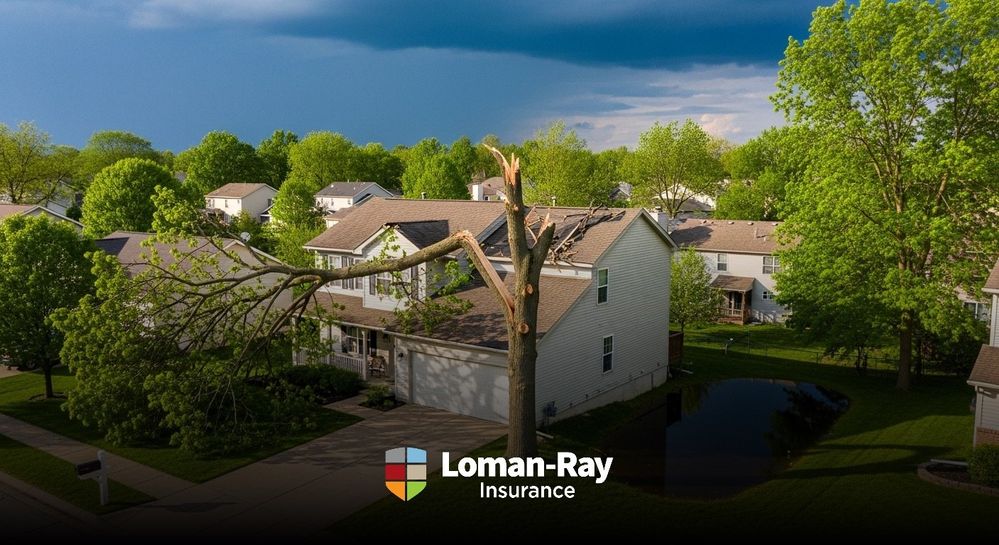
It’s 2 AM on a Tuesday in April. Your phone buzzes with a text from your tenant: “Tree fell on the house. Water everywhere. What do I do?” You throw on clothes and drive across Urbana to your rental property near campus. The scene hits you immediately — a massive oak has crushed the front porch and punched through the roof. Rain is still falling, and you can see water streaming down the inside walls.
This is when you find out if your dwelling policy — sometimes called landlord insurance — actually protects you. Or if you’re about to learn some very expensive lessons about what your coverage doesn’t include.
You walk through the front door and your heart sinks. The living room ceiling has collapsed, exposing splintered beams and insulation. Water is pooling on the hardwood floors you just refinished last summer. Your tenant meets you in the kitchen, shaken but unharmed.
“I moved everything I could upstairs,” she says. “But my laptop and textbooks got soaked.”
Here’s what’s happening with your coverage right now. Your dwelling/fire policy should cover the structural damage — the roof, ceiling, and floors. That’s typically $15,000 to $30,000 in repairs for this type of damage in the Champaign County area. But your tenant’s belongings? That’s on her renter’s insurance, not yours.
The immediate question: Do you have replacement cost or actual cash value coverage on your dwelling policy? If it’s actual cash value, your 15-year-old hardwood floors will be valued at their depreciated worth, not what it costs to replace them today. That could leave you $8,000 to $12,000 short on flooring alone.
You call your insurance company’s 24-hour claim line. The good news: they’ll have an adjuster out within 48 hours. The challenging news: your tenant needs somewhere to stay tonight, and that’s not automatically covered unless you specifically purchased loss of rents coverage on your dwelling policy.
The adjuster arrives and starts documenting everything. But as you walk through the property together, you discover something worse than the obvious damage. The water didn’t just hit the living room — it’s been seeping into the walls and down to the basement.
Behind the kitchen cabinets, you find black spots that look suspiciously like mold starting to form. The basement has standing water, and your tenant mentions the electricity flickered before going out completely.
This is where dwelling policy coverage in Champaign County gets complex. Your policy should cover the water damage that resulted directly from the storm. But if mold develops because you didn’t act quickly enough to dry everything out, that might not be covered. Many dwelling/fire policies exclude mold damage or severely limit coverage.
The electrical system is another story. If the tree damage caused the electrical problems, you’re covered. If the problems existed before the storm and the water just made them worse, you might be fighting with your insurance company.
Your tenant calls again. She’s been staying with friends, but she needs to know when she can move back in. Without loss of rent coverage, you’re not getting rental income while the property is uninhabitable, but you’re still responsible for your mortgage and property taxes.
Two weeks later, you’re dealing with a reality specific to University of Illinois rental property coverage: timing. It’s mid-April, and your tenant is a graduate student who needs housing through the summer. But repairs won’t be finished until June at the earliest.
She’s found another place and wants to break her lease. Legally, she might have grounds if the property is uninhabitable. But now you’re facing lost rental income during prime leasing season, plus the pressure to get repairs done before fall semester starts.
The insurance adjuster has approved most of the structural repairs, but there’s a dispute over the hardwood floors. Your dwelling policy has a $1,000 deductible, and they’re valuing the damaged flooring at actual cash value — about $4,000 less than replacement cost.
Here’s what you wish you’d known: Illinois landlord storm damage liability can extend beyond property damage. If your delayed repairs make the property unsafe and someone gets hurt, you could face additional liability. That’s why many Urbana landlords carry umbrella policies on top of their standard dwelling coverage.
By July, the repairs are finally complete. The total damage: $28,000 in covered repairs, minus your $1,000 deductible. But the real cost is much higher. You lost three months of rental income — $3,600. You paid for temporary housing for your graduate student tenant as a goodwill gesture — another $2,400. And you had to replace the flooring out of pocket because of the actual cash value limitation — $4,000.
The property is beautiful now, maybe even better than before. But this storm cost you over $10,000 that insurance didn’t cover, plus countless hours managing contractors and dealing with claims.
The biggest misconception about rental property insurance is that landlords think their dwelling policy covers everything. In reality, your policy covers the structure and your liability, but tenant belongings, lost rental income, and certain types of water damage often aren’t included.
Every dwelling/fire policy is different, and coverage varies significantly between carriers. What looks like comprehensive protection might have exclusions that only become apparent during a claim. That’s why working with an independent agent who can compare multiple carriers and explain the actual coverage differences is crucial.
The other lesson: Champaign-Urbana landlord insurance claims move faster when you document everything immediately and understand your dwelling policy before disaster strikes. Don’t wait until 2 AM to find out what you’re actually covered for.
Rental properties in college towns like Urbana face unique risks. Student turnover, older housing stock, and the pressure to get repairs done quickly all create challenges that standard homeowner policies aren’t designed to handle. You need a dwelling policy that accounts for these realities.
That tree could fall on your property tomorrow. The question is whether you’ll be prepared for everything that comes after the initial damage. At Loman Ray Insurance Group, we help Urbana landlords understand exactly what their dwelling policies cover before they need to file a claim. Take a look at your current coverage at https://lomanray.com.
No, your dwelling/fire policy doesn’t cover tenant belongings. That’s what renter’s insurance is for. Your policy covers the building structure, but your tenants need their own coverage for personal property, additional living expenses if they can’t stay in the unit, and their personal liability.
Actual cash value pays you what your damaged property was worth at the time of loss, accounting for depreciation. Replacement cost pays what it actually costs to replace or repair with similar materials today. For a 10-year-old roof, actual cash value might pay $8,000 while replacement cost covers the full $15,000 to replace it.
Illinois law doesn’t automatically require you to pay for tenant housing during repairs, but your lease agreement might. If the property becomes uninhabitable due to covered damage, tenants may have the right to terminate their lease. Loss of rents coverage on your dwelling policy can help replace lost income, but it doesn’t cover tenant relocation expenses unless specifically included.
Report damage as soon as possible, ideally within 24–48 hours. Most policies require “prompt” notification, and delays can complicate your claim. Take photos immediately, document all damage, and keep receipts for any emergency repairs you make to prevent further damage.
Weather-related claims like wind and hail damage are typically considered “no-fault” events, meaning they shouldn’t directly increase your rates. However, multiple claims over several years can impact your renewal or eligibility with certain carriers. Each insurance company handles this differently, which is why it’s important to work with an agent who understands how different carriers treat claims on dwelling policies.
That tree could fall on your property tomorrow. The difference between a stressful few months and a financial disaster comes down to what’s in your dwelling policy right now — not what you wish you’d added after the fact.
If you’re a landlord in Champaign-Urbana, especially with student rentals, your coverage needs are different from a standard homeowner’s. Our team at Loman Ray Insurance Group works with landlords across the university area every day. Reach out today and find out what your options are.