If you run a small business in Central Illinois, someone has probably told you to look into cyber insurance. Maybe your bank brought it up. Maybe a client contract required it. Or maybe you heard about another local business that got hit with ransomware and spent weeks digging out. Whatever brought you here, the question is the same: what does cyber insurance for small business actually cover, and do you really need it if you are not a tech company?
This guide breaks it down in plain English, no scare tactics. And if you would rather talk it through with a person, a Loman-Ray agent can review your current coverage or put together a free quote. No pressure, no jargon.
Does My Business Need Cyber Insurance?
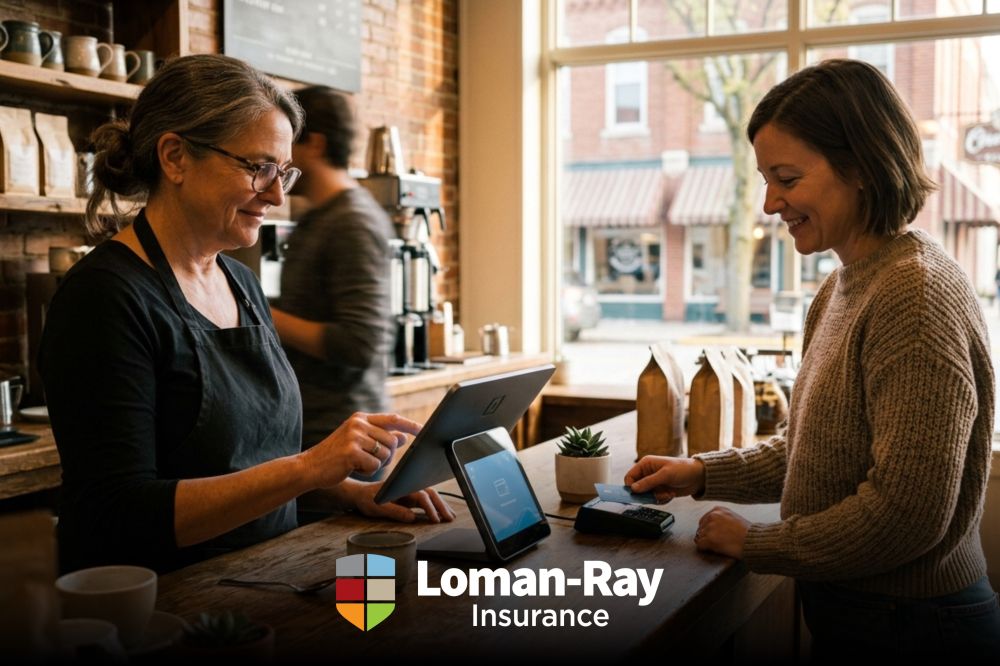
Here is a simple test. Do you take card payments? Store customer names, emails, or health information? Use email to send invoices or approve payments? If you answered yes to any of these, your business has cyber exposure, whether or not you think of yourself as a "digital" company.
That includes a lot of businesses right here in Champaign County: retail shops with point-of-sale systems, medical and dental offices, contractors who invoice by email, restaurants, and even farm operations that store data in precision ag software. Attackers often target small businesses precisely because their defenses tend to be lighter than a big corporation's.
Illinois adds its own wrinkle. The state's Personal Information Protection Act generally requires businesses to notify Illinois residents when their personal data is exposed in a breach. Notification, credit monitoring, and legal review cost real money, and those costs land on you whether the breach was your fault or not.
What Cyber Insurance for Small Business Covers
Cyber insurance is designed to provide financial protection and expert support when a cyber incident hits. A typical policy includes several core coverages:
-
Data breach coverage. Helps pay the costs of notifying affected individuals, legal fees, and potential fines tied to a breach.
-
Cyber extortion coverage. Helps cover ransom payments and related costs if your business is targeted by a ransomware attack.
-
Business interruption. Helps replace lost income and covers extra expenses if a cyber incident forces you to shut down temporarily.
-
Crisis management. Gives you access to PR experts and legal support to manage the fallout and protect your reputation.
Picture a small e-commerce shop that suffers a breach exposing customers' credit card details. With the right cyber policy in place, coverage may respond to the legal fees, customer notification, and credit monitoring, help replace income lost during the downtime, and bring in crisis management support to rebuild customer trust. Without it, the same incident could mean serious financial loss and lasting damage to the business's reputation.
Monoline Cyber Policy vs. Cyber Endorsement
This is the decision most small business owners actually face, and it is worth understanding before you buy.
Cyber endorsement
An endorsement is an add-on to an existing policy, most often a business owners policy. You can learn more about how that package works on our business owners policy (BOP) cost-effective route, but coverage limits are usually lower, and they may not include as many specialized coverages.
Monoline cyber policy
A monoline policy is a standalone policy dedicated entirely to cyber risk. It typically offers higher limits and more comprehensive protection, and it often includes specialized coverages such as network security liability and coverage for regulatory fines.
Which one fits your business?
It depends on your exposure. A smaller business with lower risk may find that an endorsement provides adequate protection at a lower cost. A business that handles sensitive data, works in a regulated industry, or depends heavily on its systems is usually better served by a monoline policy. An agent can walk through your specific situation on our cyber insurance coverage.
Optional Add-Ons Worth Asking About
Depending on how your business operates, these add-ons can close important gaps:
-
Social engineering fraud. Protects against losses when someone tricks an employee into transferring money or data.
-
Regulatory defense and penalties. Covers the cost of defending against regulatory actions and any resulting fines.
-
Media liability. Covers claims related to defamation, copyright infringement, or other media-related risks.
What Affects Cyber Liability Insurance Cost?
There is no single price tag, because cyber liability insurance cost depends on your specific risk profile. Three factors carry the most weight:
-
Industry. Businesses in fields like finance or healthcare, which handle sensitive data, often face higher premiums.
-
Data sensitivity. The type and amount of data you handle matters. More sensitive data generally means higher risk.
-
Security measures. Businesses with solid cybersecurity practices and employee training may qualify for lower premiums.
That last one is good news: investing in security can pay off twice, by reducing your odds of an incident and potentially lowering what you pay for coverage.
Three Steps Before You Buy
-
Assess your cyber risks. Get clear on the specific threats your business faces, such as data breaches or ransomware.
-
Check what you already have. If you carry a cyber endorsement on another policy, ask whether a monoline policy would offer better protection for your exposure.
-
Strengthen your practices. Solid cybersecurity habits reduce your risk and may help your premium.
Coverage details vary by policy and by state, so confirm the specifics of any policy with a licensed agent before you rely on it.
Frequently Asked Questions
Does my small business need cyber insurance if I don't sell online?
Probably, yes. If you store customer information, take card payments, or handle money by email, you have cyber exposure even without an online store. Most businesses are eligible for cyber coverage.
What's the difference between a cyber endorsement and a standalone policy?
An endorsement adds limited cyber protection to an existing policy, like a BOP, at a lower cost. A standalone (monoline) policy typically offers higher limits and more specialized coverages, making it the better fit for businesses with significant cyber exposure.
Does cyber insurance cover ransomware payments?
Many cyber policies include cyber extortion coverage, which may help cover ransom payments and related recovery costs. Whether and how it applies depends on your specific policy.
How much does cyber liability insurance cost?
It varies widely based on your industry, the sensitivity of the data you handle, and the strength of your security measures. The most reliable way to find out is to get a quote based on your actual business.
Talk It Through With a Local Agent
Cyber threats are not just a big-city, big-company problem, but the right coverage does not have to be complicated. A Loman-Ray agent can review what you have, explain your options in plain English, and put together a free quote. Reach out today and get it checked off your mid-year list.